
Description
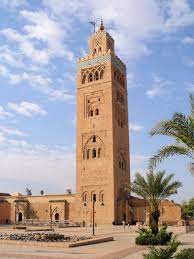
One of the Most impressive sights of our Marrakech City Tour Guide Is the Koutoubia. one of the largest and most beautiful mosques in the western Muslim world. Its 225 high standing minaret its a Hispano-Moorish work of art that is very similar to the Giralda of Seville.
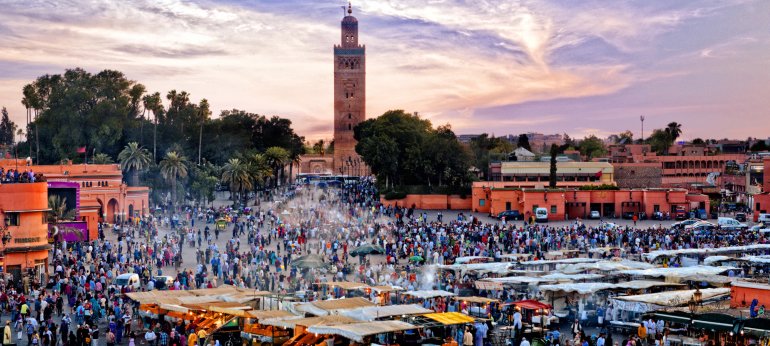
Djemaa El Fna
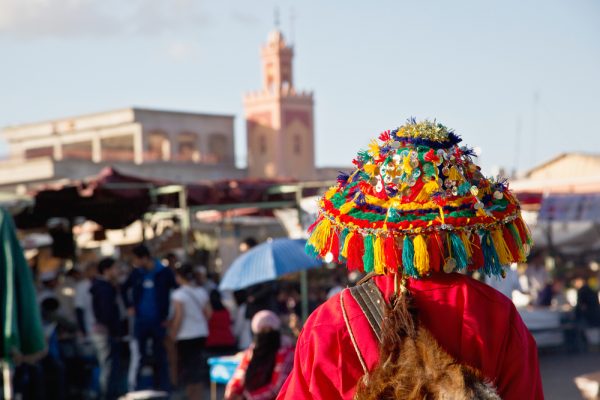
This traditional meeting place for peasants and traders from the Sous region, the High Atlas and the South has become the heart of Marrakech. This large square is filled with fruit and spice sellers, with their water wineskins and metal drinking cups, vendors, hardware stores and Barbers. In the evenings come the Gnaoua dancers descended from former Guinean slaves, musicians, storytellers, snake charmers and animators with performing monkeys.
Colorful labyrinthine souks
The metal souk where handcrafted objects and craftsmen are proud of how their ancestors did it centuries before; the dyers’ souk where skeins of colored wool hang drying in the sun; the carpet souk where handmade Moroccan carpets hang like exquisite paintings; the jewelry souk where the windows glitter with gold…
Medersa Ben Youssef (Koranic School)
The Koranic school was founded in the early 14th century by the Moroccan monarch Abu el Hassan. Only with the reign of the Saadids who expanded and redecorated the building in 1570, Madrasa became the largest Islamic university in the Maghreb. Region. Up to 900 students would have lived there to study law and theology. The monarchy supported them by providing food and lodging; however, the cooking was to be done by the students themselves. Madrasa Ben Youssef was transformed into a museum in 1960 and, since its renovation in 1999, is one of the most popular sites in Marrakech. The bronze door at the entrance of the university, adorned with beautiful cedar wood carvings and mosaics, is an impressive masterpiece of its time.
The Bahia Palace
The Bahia Palace is one of the most important architectural works of Marrakech. It was built at the end of the 19th century with the aim of being the most impressive palace of all time.
The construction of the palace took more than a decade and was carried out by the grand vizier of Sultan Abdelaziz Si Moussa. At the end of the 19th century it was left in the hands of Abu Bou Ahmed, a black slave who became vizier. He helped to bring the palace to its maximum expression.
In the 8 hectares of the palace are located 150 rooms overlooking various courtyards and gardens. The most interesting part of the Bahia Palace is the harem of the 4 wives and 24 concubines of Abu Bou Ahmed.
The Koutoubia
The Koutoubia Mosque is the most important mosque in Marrakech and was one of the largest in the Islamic world when its construction was completed in 1158.
The Koutoubia was begun in 1141 by the Almohad caliph Abd al Mu-min and is notable for its high minaret (reminiscent of the Giralda) and its color, pink sandstone, typical of the city.
Its name, which means “mosque of the booksellers”, is due to the numerous bookstalls that surrounded it in its early days.
Our Marrakech City Tour Guide finished after lunch and the rest of the day is in your own


